How to Create a Budget from Scratch
If you’ve never made a budget before, you’re not alone — and you’re in the right place.
This guide is for anyone starting from zero: recent graduates, people tired of wondering where their paycheck went, or anyone who just wants more control over their money.
Here’s what we’ll walk through together:
- Why a budget actually matters and what it can do for your financial life
- How to gather your income and expense info so you’re working with real numbers, not guesses
- How to pick a budgeting method that fits your lifestyle — not someone else’s
No complicated spreadsheets. No finance degree required. Just a straightforward way to create a budget from scratch that you’ll actually stick to.
Understand Why a Budget Is Essential for Financial Success
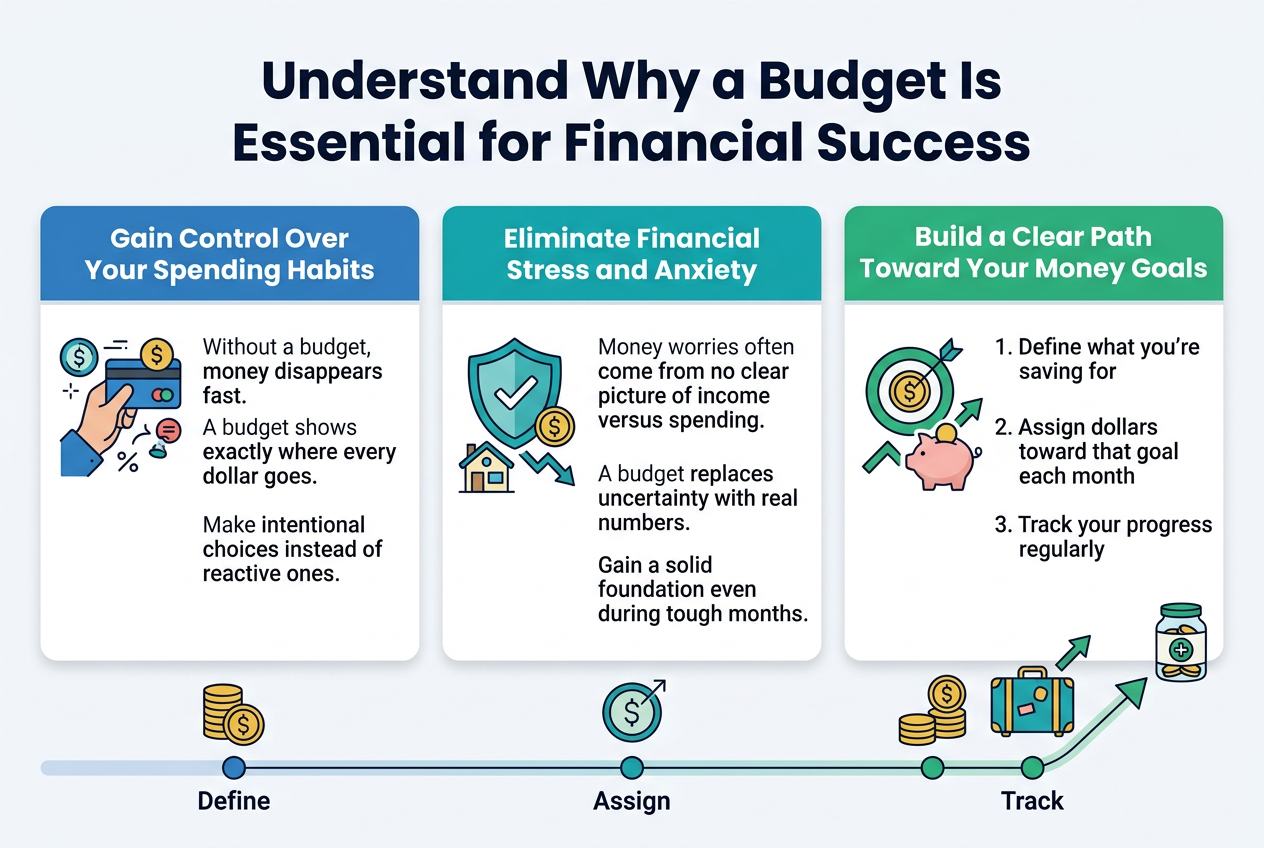
Gain Control Over Your Spending Habits
Without a budget, money has a sneaky way of disappearing. You swipe your card, grab takeout a few times, pay some subscriptions you forgot about — and suddenly the month is gone along with your paycheck. A budget puts you in the driver’s seat by showing exactly where every dollar goes, so you can make intentional choices instead of reactive ones.
Eliminate Financial Stress and Anxiety
Money worries rank as one of the top sources of stress for most people. That anxiety often comes not from having too little, but from having no clear picture of what’s coming in versus going out. A budget replaces that foggy uncertainty with real numbers, giving you a solid foundation to stand on — even during tough months.
Build a Clear Path Toward Your Money Goals
Wanting to save for a vacation, pay off debt, or build an emergency fund is one thing. Actually getting there is another. A budget turns vague wishes into a concrete plan:
- Define what you’re saving for
- Assign dollars toward that goal each month
- Track your progress regularly
When your money has a purpose, reaching your goals stops feeling like luck and starts feeling like a system.
Gather the Financial Information You Need Before You Start
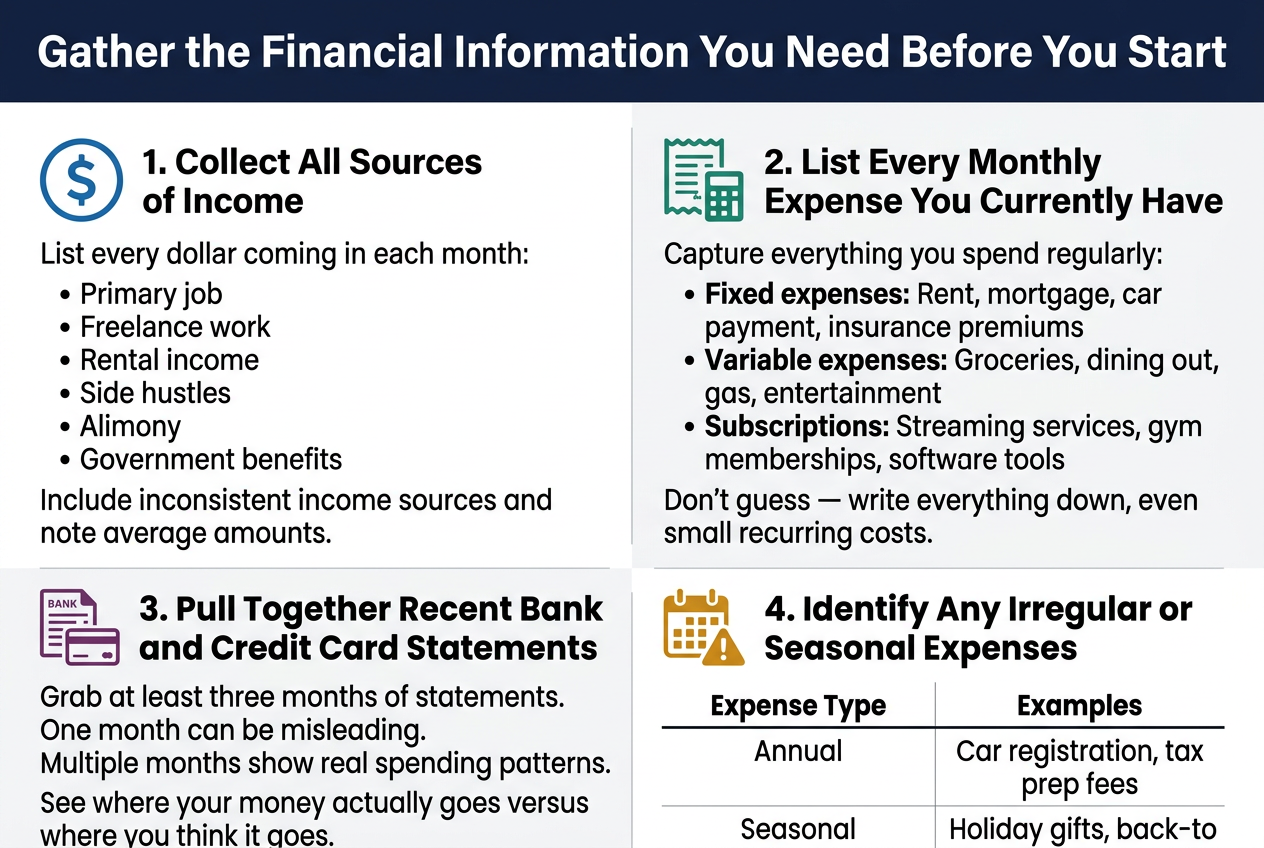
Collect All Sources of Income
List every dollar coming in each month — your primary job, freelance work, rental income, side hustles, alimony, or government benefits. Include even inconsistent income sources, noting average amounts.
List Every Monthly Expense You Currently Have
Capture everything you spend money on regularly:
- Fixed expenses: Rent, mortgage, car payment, insurance premiums
- Variable expenses: Groceries, dining out, gas, entertainment
- Subscriptions: Streaming services, gym memberships, software tools
Don’t guess — write everything down, even small recurring costs.
Pull Together Recent Bank and Credit Card Statements
Grab at least three months of statements to spot real spending patterns. One month can be misleading due to one-time purchases. Looking at multiple months gives you an honest picture of where your money actually goes versus where you think it goes.
Identify Any Irregular or Seasonal Expenses
These are the budget-busters people forget about:
| Expense Type | Examples |
|---|---|
| Annual | Car registration, tax prep fees |
| Seasonal | Holiday gifts, back-to-school shopping |
| Occasional | Home repairs, medical co-pays |
Divide these totals by 12 and set aside that amount monthly so they never catch you off guard.
Calculate Your Net Income Accurately
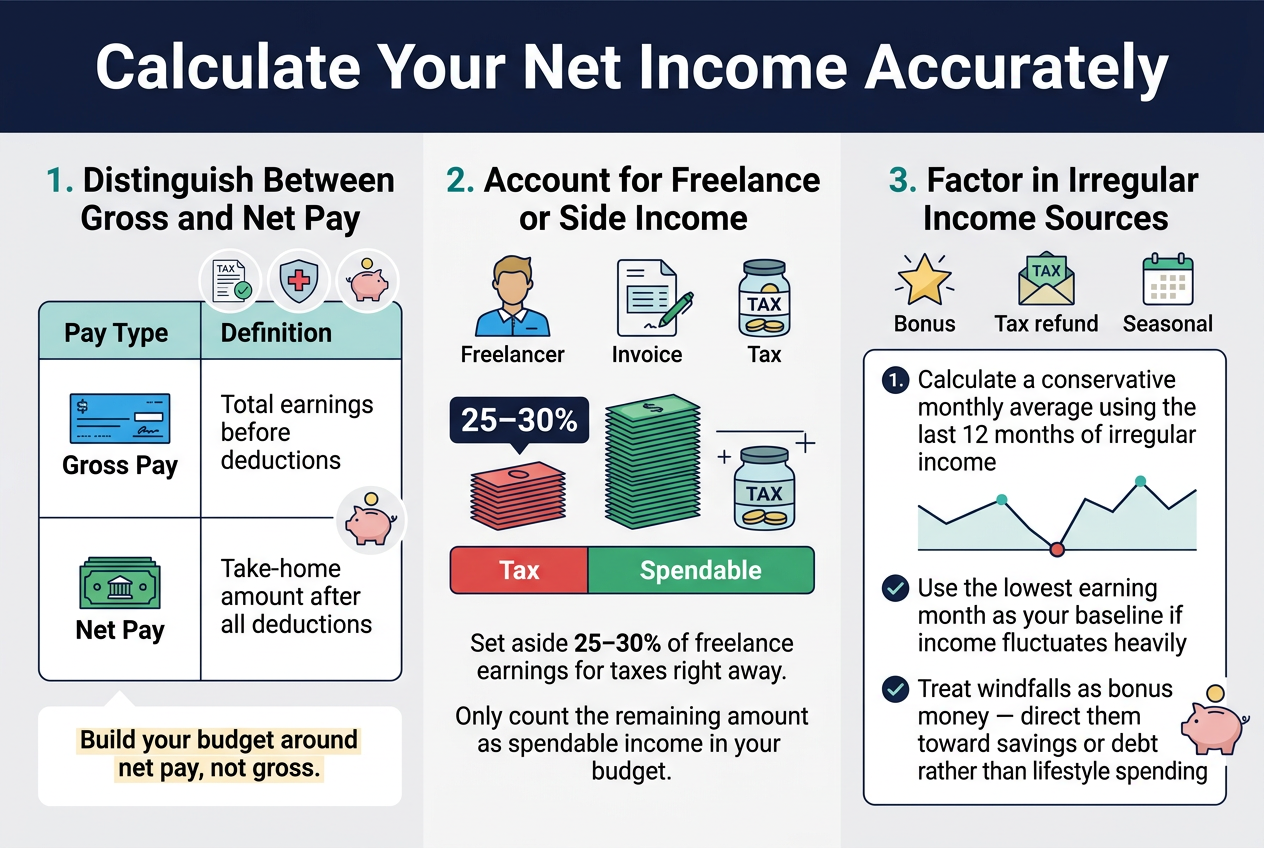
Distinguish Between Gross and Net Pay
Your gross pay is what you earn before deductions. Your net pay — the number that actually hits your bank account — is what you actually have to work with. Always build your budget around net pay, not gross. Taxes, health insurance, and retirement contributions quietly shrink that bigger number before you ever see it.
| Pay Type | Definition |
|---|---|
| Gross Pay | Total earnings before deductions |
| Net Pay | Take-home amount after all deductions |
Account for Freelance or Side Income
Side gigs add real money, but they come with a catch — taxes aren’t automatically withheld. Set aside 25–30% of freelance earnings for taxes right away. Only count the remaining amount as spendable income in your budget.
Factor in Irregular Income Sources
Bonuses, tax refunds, and seasonal work don’t show up every month, so don’t build them into your regular budget. Instead:
- Calculate a conservative monthly average using the last 12 months of irregular income
- Use the lowest earning month as your baseline if your income fluctuates heavily
- Treat windfalls as bonus money — direct them toward savings or debt rather than lifestyle spending
Track and Categorize Your Expenses Effectively
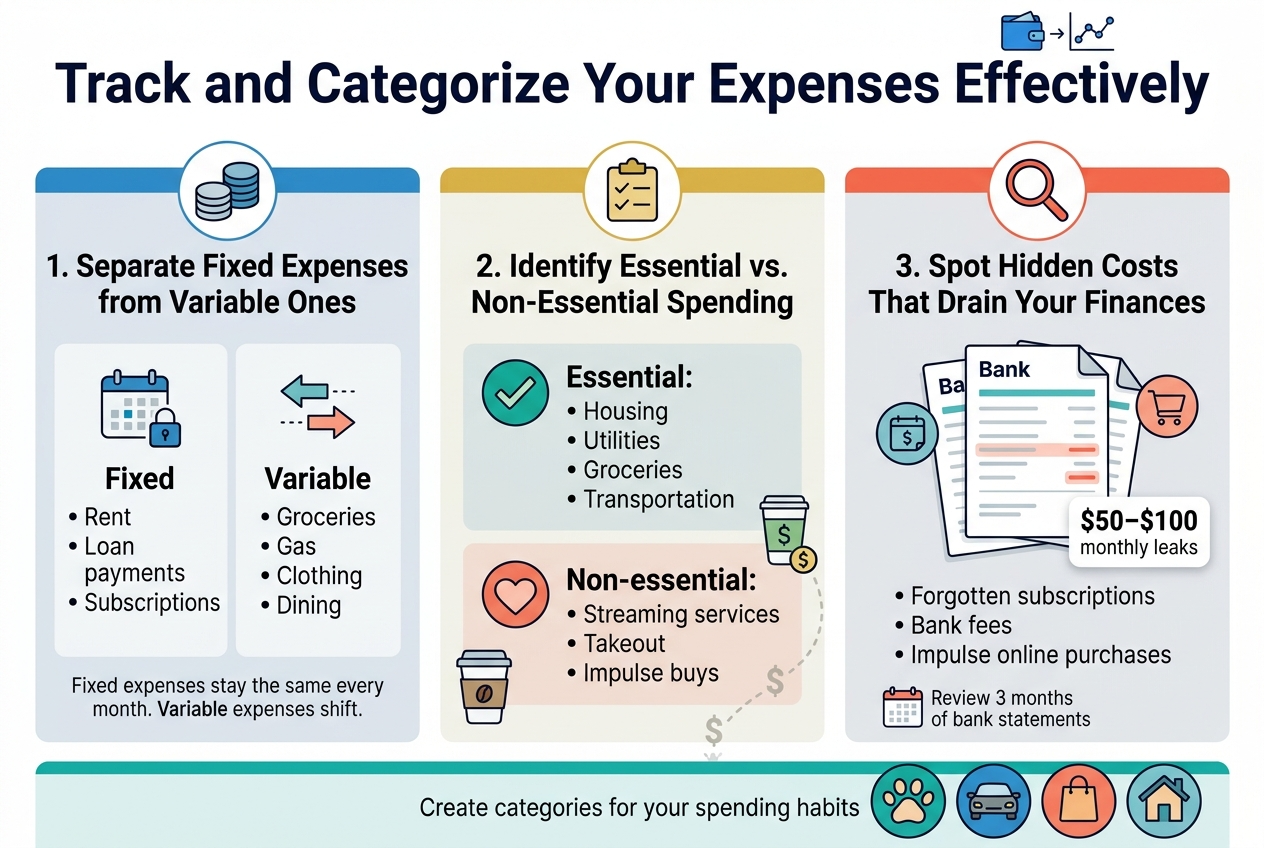
Separate Fixed Expenses from Variable Ones
Fixed expenses stay the same every month — rent, car payments, insurance. Variable expenses shift — groceries, dining out, entertainment. Knowing the difference helps you see where you actually have room to cut.
| Type | Examples |
|---|---|
| Fixed | Rent, loan payments, subscriptions |
| Variable | Groceries, gas, clothing, dining |
Identify Essential vs. Non-Essential Spending
Essentials keep the lights on and food on the table. Non-essentials are the things you want but could survive without. Be honest here — that daily coffee run adds up fast.
- Essential: Housing, utilities, groceries, transportation
- Non-essential: Streaming services, takeout, impulse buys
Spot Hidden Costs That Drain Your Finances
These are the sneaky ones — forgotten subscriptions, bank fees, impulse online purchases. Pull up three months of bank statements and look for charges you barely remember signing up for. You’ll likely find $50–$100 in monthly leaks.
Use Categories That Reflect Your Actual Lifestyle
Generic budget templates don’t fit everyone. If you have pets, a side hustle, or a gym habit, build those into your categories. A budget that mirrors your real life is one you’ll actually stick to.
Set Realistic and Meaningful Financial Goals
Define Short-Term Goals You Can Achieve Quickly
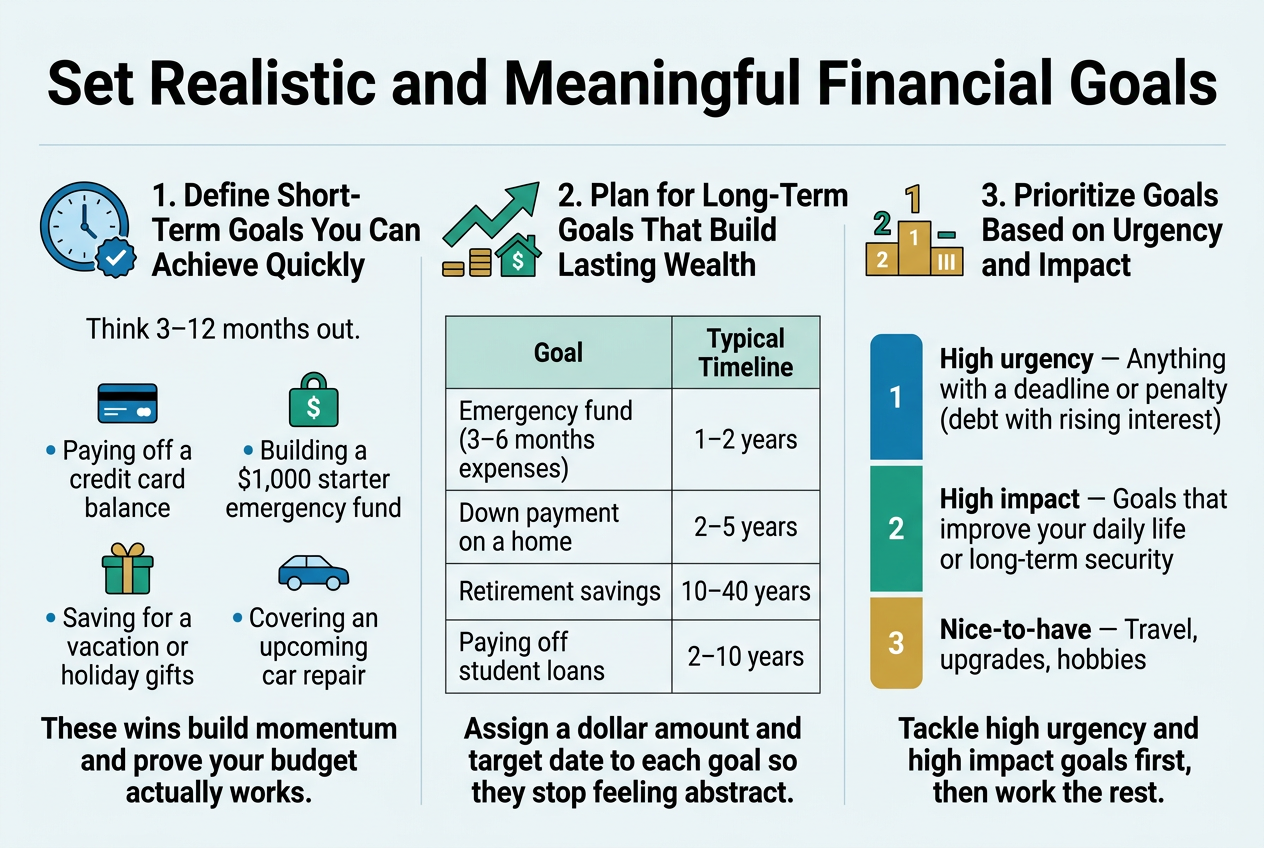
Short-term goals keep you motivated when budgeting feels tedious. Think 3–12 months out. Good examples include:
- Paying off a credit card balance
- Building a $1,000 starter emergency fund
- Saving for a vacation or holiday gifts
- Covering an upcoming car repair
These wins build momentum and prove your budget actually works.
Plan for Long-Term Goals That Build Lasting Wealth
Long-term goals shape the bigger picture of your financial life — usually 1–5+ years away. Common ones include:
| Goal | Typical Timeline |
|---|---|
| Emergency fund (3–6 months expenses) | 1–2 years |
| Down payment on a home | 2–5 years |
| Retirement savings | 10–40 years |
| Paying off student loans | 2–10 years |
Assign a dollar amount and target date to each goal so they stop feeling abstract.
Prioritize Goals Based on Urgency and Impact
Not every goal deserves equal attention right now. A simple way to rank them:
- High urgency — Anything with a deadline or penalty (debt with rising interest)
- High impact — Goals that improve your daily life or long-term security
- Nice-to-have — Travel, upgrades, hobbies
Tackle high urgency and high impact goals first, then work the rest in as your budget allows.
Choose the Right Budgeting Method for Your Lifestyle
Apply the 50/30/20 Rule for Simple Budgeting
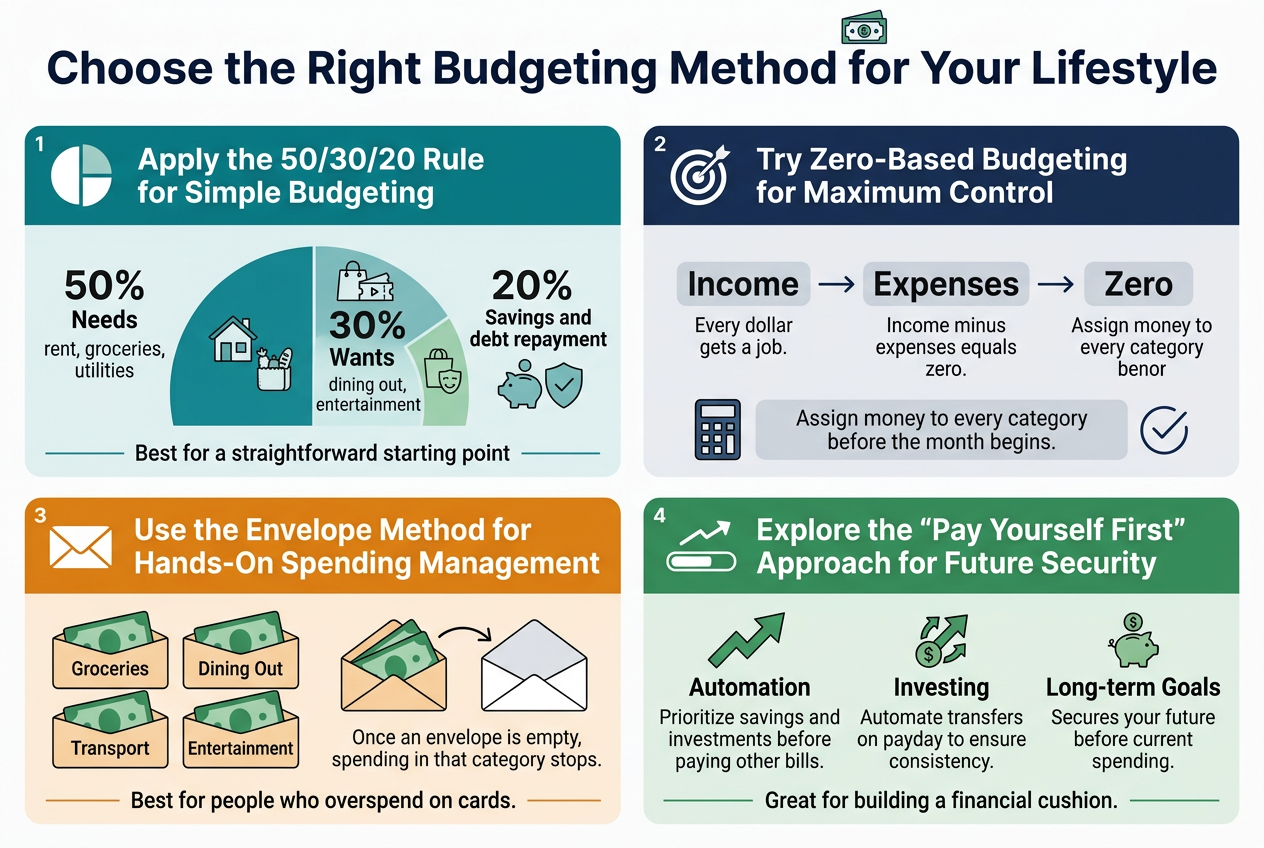
Split your after-tax income into three buckets:
- 50% → Needs (rent, groceries, utilities)
- 30% → Wants (dining out, entertainment)
- 20% → Savings and debt repayment
This method works best if you want a straightforward starting point without obsessing over every dollar.
Try Zero-Based Budgeting for Maximum Control
Every dollar gets a job. Income minus expenses equals zero — meaning you intentionally assign money to every category before the month begins. It takes more effort but leaves no room for mystery spending.
Use the Envelope Method for Hands-On Spending Management
Withdraw cash and divide it into labeled envelopes for each spending category. Once an envelope is empty, spending in that category stops. It’s old-school but incredibly effective for people who overspend on cards.
Explore Budgeting Apps That Automate the Process
Apps remove much of the manual tracking headache. Popular options include:
| App | Best For |
|---|---|
| YNAB | Zero-based budgeting |
| Mint | Automatic expense tracking |
| EveryDollar | Simple monthly planning |
| Copilot | Smart AI-driven insights |
Pick whichever method actually matches how you think about money — the best budget is the one you’ll stick with.
Stick to Your Budget and Adjust It Over Time
Schedule Regular Budget Check-ins to Stay on Track
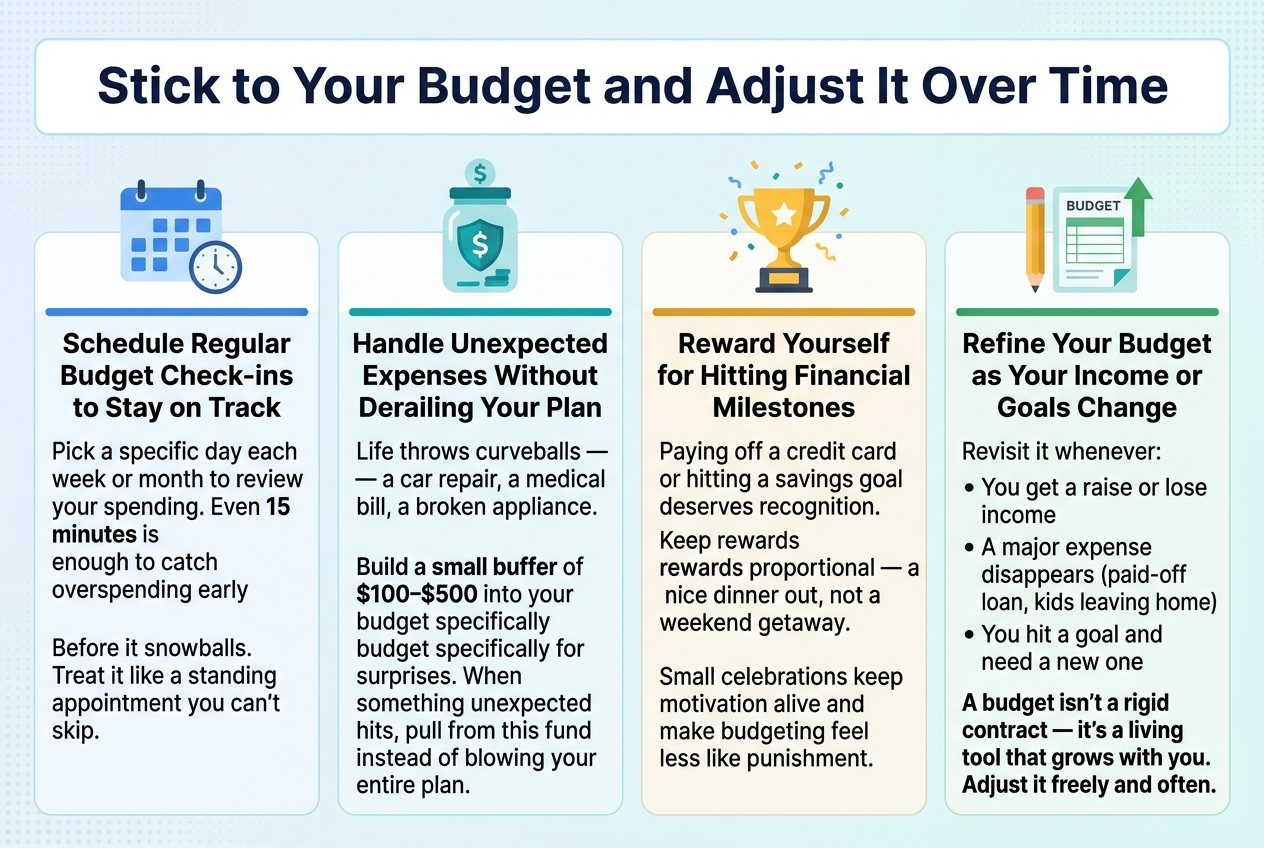
Pick a specific day each week or month to review your spending. Even 15 minutes is enough to catch overspending early before it snowballs. Treat it like a standing appointment you can’t skip.
Handle Unexpected Expenses Without Derailing Your Plan
Life throws curveballs — a car repair, a medical bill, a broken appliance. Build a small buffer of $100–$500 into your budget specifically for surprises. When something unexpected hits, pull from this fund instead of blowing your entire plan.
Reward Yourself for Hitting Financial Milestones
Paying off a credit card or hitting a savings goal deserves recognition. Keep rewards proportional — a nice dinner out, not a weekend getaway. Small celebrations keep motivation alive and make budgeting feel less like punishment.
Refine Your Budget as Your Income or Goals Change
Your budget from last year probably doesn’t fit your life today. Revisit it whenever:
- You get a raise or lose income
- A major expense disappears (paid-off loan, kids leaving home)
- You hit a goal and need a new one
A budget isn’t a rigid contract — it’s a living tool that grows with you. Adjust it freely and often.
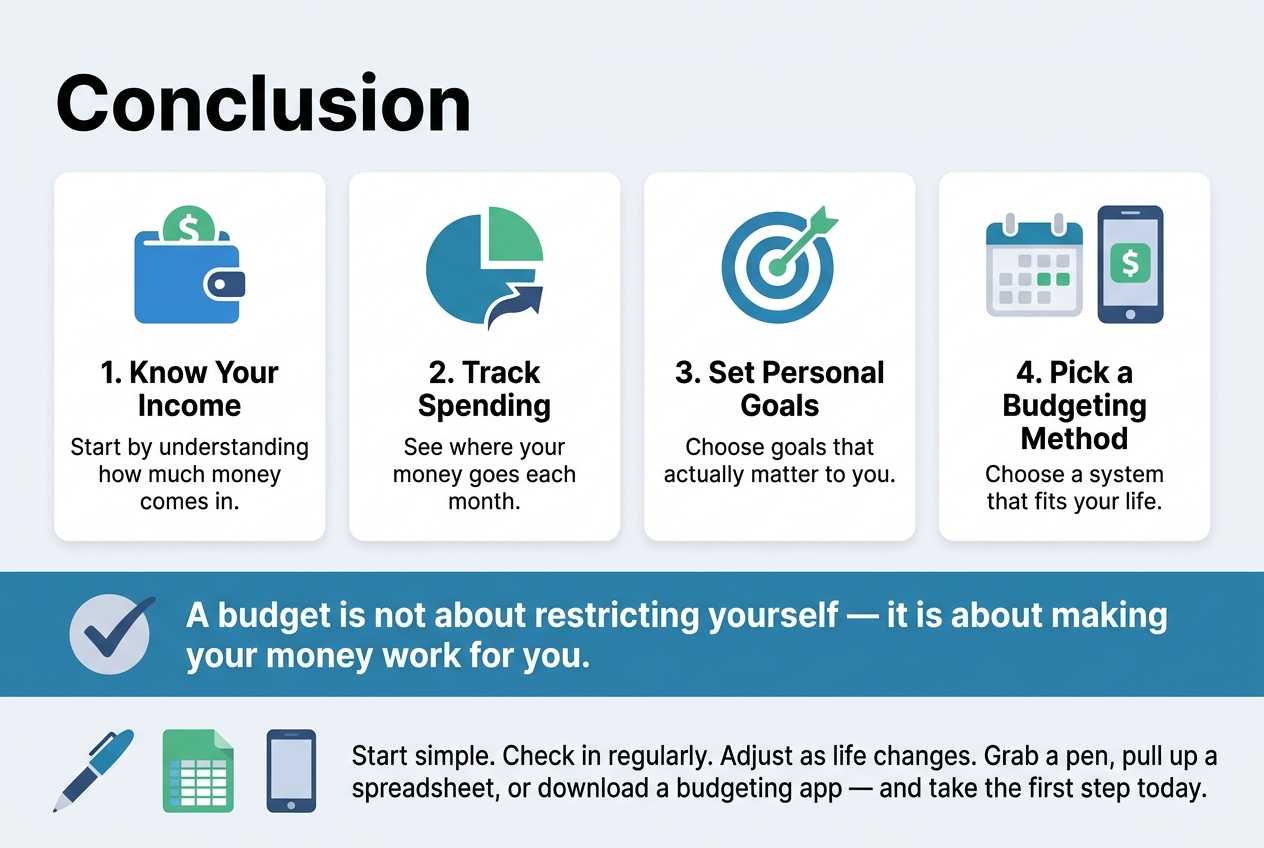
Getting a handle on your finances doesn’t have to feel overwhelming. By knowing your income, tracking where your money goes, setting goals that actually matter to you, and picking a budgeting method that fits your life, you’re already ahead of the game. A budget isn’t about restricting yourself — it’s about making sure your money works for you instead of the other way around.
The best part? You don’t have to get it perfect right away. Start simple, check in on your budget regularly, and tweak it as your life changes. The sooner you start, the sooner you’ll feel that sense of control and confidence that comes with knowing exactly where you stand financially. Grab a pen, pull up a spreadsheet, or download a budgeting app — whatever works for you — and take that first step today.