What Is a Personal Loan? The Complete In-Depth Guide
Navigating the modern financial landscape often requires additional capital to achieve major life milestones, consolidate high-cost debts, or manage unexpected expenses. Among various financial products, a personal loan stands out as one of the most flexible tools available to consumers. In this comprehensive guide, we explore what a personal loan is, how it operates, the underlying mechanics of interest and repayment, and how you can determine if it is the right financial instrument for your specific circumstances.

Figure 1: Evaluating terms, interest structures, and digital loan disclosures before committing.
What Exactly Is a Personal Loan?
At its core, a personal loan is a fixed sum of money borrowed from a financial institution—such as a commercial bank, credit union, or online lender—that you agree to pay back over a specified period with interest. Unlike mortgages or auto loans, which are strictly earmarked for purchasing a home or a car, personal loans are typically unsecured. This means you are not required to pledge any collateral (such as your property or vehicle) to back the loan. Instead, lenders approve or deny your application based on your creditworthiness, income history, and debt-to-income ratio.
How Personal Loans Function: The Mechanics
Understanding the lifecycle of a personal loan helps demystify the borrowing process. The agreement generally encompasses three distinct phases: application and underwriting, fund disbursement, and structured repayment.
- Principal Amount: The initial lump sum borrowed from the institution, which serves as the base upon which interest is calculated.
- Annual Percentage Rate (APR): The true annual cost of borrowing, which includes both the nominal interest rate and any mandatory origination fees.
- Amortization Schedule: A predetermined table showing how much of each monthly payment goes toward reducing the principal versus paying off accumulated interest.
Common Applications and Use Cases
Because lenders impose minimal restrictions on how the funds are utilized, borrowers leverage personal loans for diverse objectives. The table below outlines major use categories:
| Loan Category | Typical Application | Strategic Suitability |
| Debt Consolidation | Merging high-interest revolving credit cards into one fixed monthly installment. | High (Lowers average APR and simplifies tracking) |
| Home Improvements | Upgrading roofs, renovating kitchens, or installing energy-efficient systems. | Moderate (Can enhance underlying property value) |
| Emergency Expenses | Covering urgent medical bills, unexpected travel, or critical car repairs. | Conditional (Best utilized when cash reserves are depleted) |
Strategic Debt Consolidation and Financial Budgeting
A primary driver for personal loan adoption is debt consolidation. By replacing multiple high-interest credit lines with a single, lower-rate personal loan, borrowers can significantly streamline their monthly commitments and accelerate their path toward financial freedom.
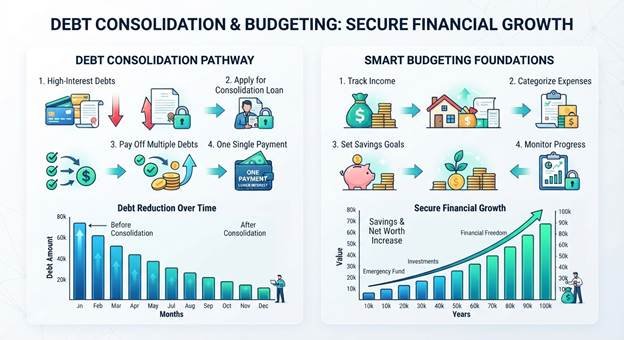
Figure 2: Step-by-step pathway for debt consolidation and long-term asset growth.
Advantages and Potential Pitfalls
Key Advantages: Personal loans provide rapid access to capital, predictable monthly installments through fixed interest rates, and freedom from risking personal assets due to their unsecured nature.
Potential Pitfalls: Borrowers with fair or poor credit scores may encounter steep interest rates. Additionally, some lenders charge origination fees ranging from 1% to 8% of the total loan amount, along with potential penalties for early repayment.
Conclusion and Next Steps
Ultimately, a personal loan is a powerful financial instrument when managed with discipline. Before moving forward, applicants should carefully review their credit reports, compare offers across multiple lenders, and verify that the monthly installments align comfortably with their long-term budget.