

Step 1: Envision Your Retirement Lifestyle
Step 1: Envision Your Retirement Lifestyle in High Definition
Before we even touch a calculator or open a spreadsheet, you need to do some serious daydreaming. This is the most crucial step, yet it’s the one most people skip in a rush to look at the math. You cannot accurately price out a lifestyle if you don’t know what that lifestyle is. Many people assume retirement is just an endless weekend, but without the structure of work, you have 40 to 50 extra hours a week to fill. How will you fill them?
Ask yourself these deep, probing questions:
• Where will you live? Are you staying in your current home in a high-cost-of-living area, downsizing to a smaller condo to reduce maintenance, or moving to a beach town or a different country where your dollars stretch further? Echolocation is the single biggest factor in your baseline expenses.
• What will you do every day? Will you take up expensive hobbies like golf, sailing, or vintage car restoration? Or do you prefer low-cost activities like hiking, painting, volunteering, and reading?
• How often will you travel? A yearly road trip to visit family costs significantly less than bi-annual international trips. Travel is often the largest variable expense for new retirees.
• Will you still have debt? Entering retirement with a mortgage, car loans, and credit card debt dramatically increases the amount of income you need to generate. Paying off your mortgage before you retire can drastically reduce your monthly overhead, acting as a massive risk reducer.
• Who will you support? Are you planning to help adult children with down payments on houses, or fund your grandchildren’s college education?
Let’s look at three hypothetical retirees to illustrate this point.
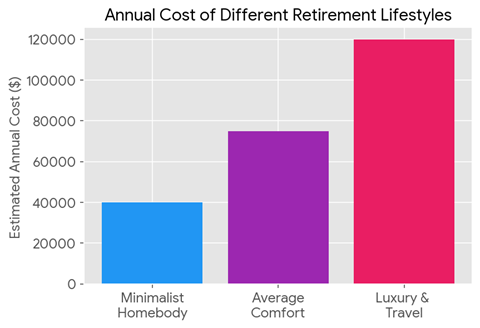
Sarah wants to sell her suburban house, buy a luxury RV, and travel across the country for the first decade of her retirement. Her expenses will heavily revolve around gas, campsite fees, vehicle maintenance, and eating out at different destinations.
John wants to stay in his paid-off home in the Midwest, volunteer at the local library, and have family over for Sunday dinners. His biggest expenses will be property taxes, utilities, and groceries.
Elena wants to move to a retirement community in Florida, play golf three times a week, and fly to Europe every summer. She needs a robust budget for HOA fees, club memberships, and international airfare.
Sarah, John, and Elena are going to need very different nest eggs. Before moving to the next step, take twenty minutes to write down a rough outline of your ideal retirement month. Try to put a dollar figure next to each activity. This isn’t just about math; it’s about motivation. A clear, compelling vision of the future makes it much easier to save today.
Step 2: The 80% Rule (Estimating Your Baseline Expenses)
Step 2: The 80% Rule (Estimating Your Baseline Expenses)
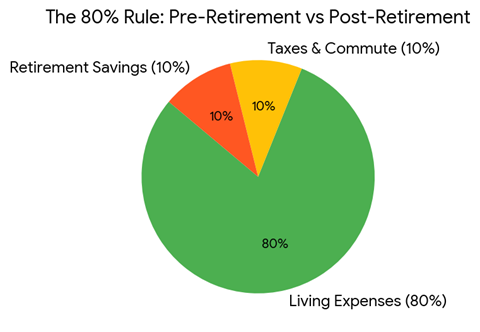
Now that you have a vision, let’s talk numbers. A common starting point in the financial planning world is the ‘80% Rule’. The premise is simple: you will likely need about 80% of your prep-retirement income to maintain your current standard of living in retirement.
Why 80% and not 100%? Because when you stop working, a lot of your expenses naturally disappear. You are no longer commuting, buying professional work clothes, or paying payroll taxes like FICA. Most importantly, you are no longer funneling 10% to 20% of your income into retirement savings accounts. If you were making $100,000 a year but saving $15,000 of it and paying $7,000 in payroll taxes, you were actually living on $78,000.
However, do not blindly trust the 80% rule without checking your own math. The 80% rule is a blunt instrument. If you plan to travel extensively like Elena, your expenses might actually go up to 100% or even 120% of your current income in the early “go-go” years of retirement. If you plan to live a minimalist lifestyle with a paid-off house like John, you might only need 50% or 60% of your current income.
To get a more accurate number, create a mock retirement budget. Look at your current bank and credit card statements. List out your expected monthly costs for housing (taxes, insurance, maintenance), food, utilities, transportation, health insurance, hobbies, and travel. Multiply that monthly total by 12, and you have your estimated annual retirement expenses. For this guide, let’s assume your mock budget shows you need $80,000 a year to live your dream lifestyle comfortably.
Step 3: Factor in Guaranteed Income
Step 3: Factor in Guaranteed Income (Social Security and Pensions)
Here is a piece of good news: you usually don’t have to fund your entire retirement out of your own pocket. Most people have other income streams that will help cover the bills, acting as a foundation for their financial house.
First, check your expected Social Security benefits. You can do this easily by creating an account on the SSA website. Your benefit will depend on your highest 35 years of earnings and the age at which you choose to claim benefits. Claiming early at 62 results in a permanently reduced payout, while delaying until age 70 maximizes your monthly check.
Second, if you are lucky enough to be a teacher, government worker, or an employee at a legacy corporation with a defined-benefit pension, factor that in.
Finally, consider any other guaranteed income sources, such as rental income from real estate or annuities you may have purchased.
Let’s return to our example. Your mock budget from Step 2 shows you need $80,000 a year. You log into the SSA website and see that you and your spouse will collect a combined $35,000 a year in Social Security. You do not have a pension.
Total Needs: $80,000
Minus Social Security: $35,000
Equals the Income Gap: $45,000
This $45,000 is your ‘income gap’. It is the exact amount your personal investment portfolio needs to produce annually to sustain your lifestyle. The goal of retirement saving is simply to build a portfolio large enough to generate this income gap without running out of money.
Step 4: The 4% Rule and The Multiply-by-25 Math
Step 4: The 4% Rule and The Multiply-by-25 Math
Here is where the magic happens. How do you figure out the total lump sum you need to generate that $45,000 a year? You use the 4% Rule.
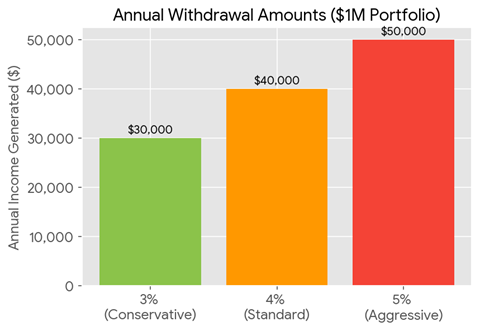
The 4% Rule stems from a famous piece of financial research known as the Trinity Study, conducted by professors at Trinity University in the late 1990s. In plain English, the study analyzed historical stock and bond market data. They found that if you have a balanced portfolio (e.g., 50% stocks and 50% bonds), you can withdraw 4% of your total savings in your first year of retirement, adjust that dollar amount for inflation every subsequent year, and your money is highly likely to last for at least 30 years without being depleted.
To find your target portfolio size, you simply take your ‘income gap’ (from Step 3) and multiply it by 25. (Mathematically, withdrawing 4% is the same as dividing by 25).
Let’s run the math on our ongoing example:
Annual Income Gap: $45,000
Multiply by 25: $45,000 x 25 = $1,125,000.
In this scenario, your magic retirement number is $1.125 million.
What if you want to be extra conservative, or what if you are part of the FIRE (Financial Independence, Retire Early) movement and plan to retire at 45? Because you need your money to last 40 or 50 years instead of 30, many financial planners recommend a 3% or 3.5% withdrawal rate.
To calculate a 3.33% withdrawal rate, multiply your annual income gap by 30 instead of 25. Using our $45,000 example, you would need $1,350,000. This provides an extra layer of security against prolonged market downturns early in your retirement.
Step 5: Defeating the Silent Wealth Killers
Step 5: Defeating the Silent Wealth Killers (Inflation and Healthcare)
We cannot have an honest conversation about retirement without addressing the two elephants in the room: inflation and healthcare. These are the silent wealth killers that can derail even the best-laid plans.
Inflation means the cost of living will go up over time. A loaf of bread will cost more in twenty years than it does today. A $50,000 lifestyle today will cost over $100,000 in thirty years, assuming average historical inflation. The beauty of the 4% rule is that it actually accounts for this. Because your money remains invested in a mix of stocks and bonds even while you are retired, it continues to grow and outpace inflation, protecting your purchasing power over the decades.
Healthcare, however, is a wild card. Medical costs tend to rise significantly faster than general economic inflation. As you age, your medical needs will inevitably increase. If you retire before you are eligible for Medicare at age 65, you will need to purchase insurance on the open market, which can cost upwards of $1,000 a month per person. Even with Medicare, there are premiums, co-pays, and uncovered expenses like dental, vision, and hearing aids.
Furthermore, long-term care is rarely covered by standard health insurance. It is highly recommended to pad your retirement number to account for out-of-pocket medical expenses. If your calculation says you need $1.125 million, aiming for $1.25 million can provide a much-needed buffer for unexpected health issues, ensuring that a medical emergency does not become a financial catastrophe.
Step 6: Where Do You Stand Today?
Step 6: Where Do You Stand Today? (The Power of Compound Interest)
Now that you have calculated your target number, take a deep breath. It is probably a very large number. Look at your current investment accounts, 401(k)s, IRAs, Health Savings Accounts (HSAs), and other assets. Subtract your current savings from your target number.
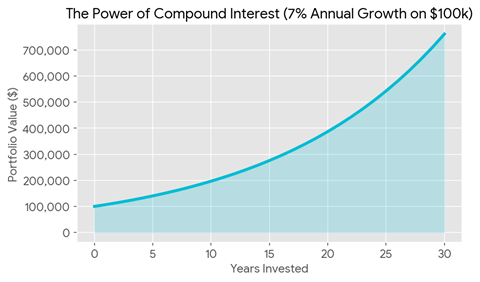
If the gap looks terrifyingly large, do not panic. You do not have to save all of that money from your paycheck. Compound interest is on your side. Albert Einstein famously called compound interest the eighth wonder of the world, and for good reason.
If you have 10, 15, or 20 years left until retirement, the money you invest today is going to double, and potentially triple, before you need it. Historically, the stock market has returned an average of 7% to 10% per year after inflation.
For example, if you have $200,000 saved today and you don’t add another penny to it, it will grow to over $800,000 in 20 years at a 7% return. But you are going to add to it! There are hundreds of online compound interest calculators that will show you exactly how much you need to save per month to bridge the gap between where you are today and your final goal. Consistency is more important than timing the market. Automate your investments so the money leaves your checking account before you even see it.
Step 7: What If You Are Falling Behind?
Step 7: What If You Are Falling Behind? (Catch-Up Strategies)
If you have crunched the numbers and realized you are running out of time, you still have highly effective options. Retirement isn’t an all-or-nothing game; it is highly adaptable. Here are a few powerful ways to catch up:
1. Delay Retirement by a Few Years: This is mathematically the most powerful lever you can pull. Working just two or three extra years does three incredible things simultaneously: it gives your current investments more time to grow, it reduces the number of years you need to rely on your savings, and it increases your Social Security payouts by 8% for every year you delay past your full retirement age.
2. Transition into ‘Semi-Retirement’: Who says you have to stop working entirely on a Friday and never work again on a Monday? Many people find abrupt retirement jarring and isolating. Transitioning into a part-time job, freelance work, consulting, or turning a hobby into a small business can be incredibly fulfilling. Making just $15,000 a year working a fun part-time job means you need nearly $400,000 LESS in your retirement portfolio!
3. Downsize Your Life Early: Don’t wait until you are 65 to sell the big, empty suburban house. Downsizing to a cheaper area or a smaller home radically cuts your expenses now. This frees up massive amounts of cash flow, allowing you to supercharge your savings rate in your final working years, while simultaneously lowering the amount of income you will need later.
4. Maximize Catch-Up Contributions: If you are 50 or older, the IRS allows you to make additional “catch-up” contributions to your 401(k) and IRA accounts. Take full advantage of these tax-advantaged spaces to shelter your income and boost your balance quickly.