Mastering Cash Flow: How a Monthly Budget Actually Works
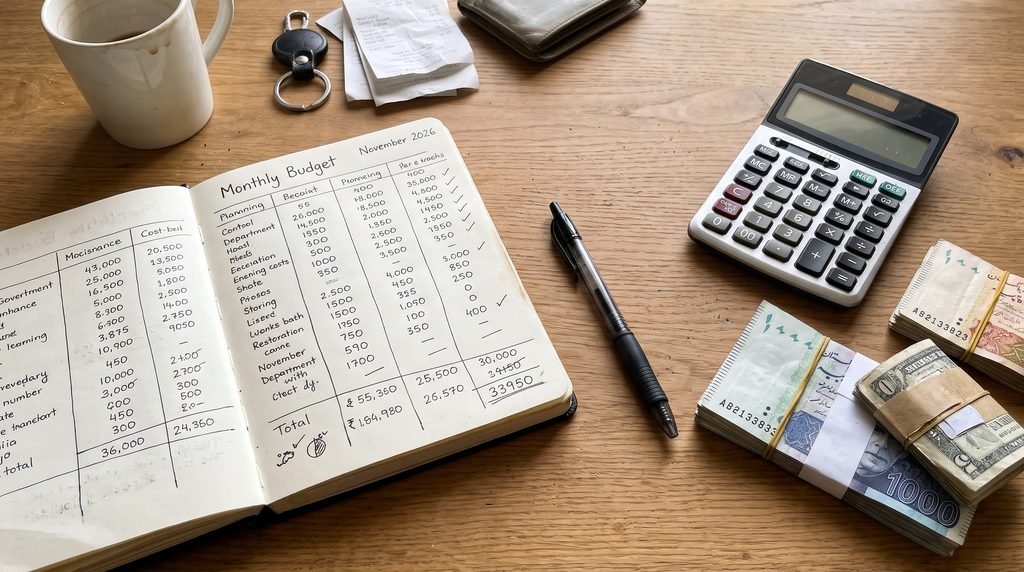
A monthly budget is a proactive blueprint that directs every dollar you earn toward specific purposes before the month begins. Rather than functioning as a backward-looking receipt ledger or a financial straitjacket, an effective budget transforms your income into an active tool for debt elimination, wealth accumulation, and stress-free spending.
The Mechanics of a Budget Cycle
A monthly budget operates on a 30-day closed-loop cycle. Because most recurring bills (rent, utilities, subscriptions, insurance) arrive once every four weeks, standardizing your cash flow on a calendar month provides a predictable operational rhythm:
- Calculate Net Real Income: Tally all take-home pay received during the month after taxes, healthcare, and pre-tax retirement deductions. If income fluctuates, base the starting figure on a conservative rolling baseline.
- Catalog Fixed Obligations: Isolate non-negotiable living costs that remain static month to month (housing, loan amortizations, insurance policies, basic utilities).
- Estimate Variable Essentials: Assign ceilings to essential costs that fluctuate based on consumption (groceries, fuel, seasonal electricity, transit).
- Allocate Discretionary Wants: Cap lifestyle spending such as restaurant dining, entertainment, hobbies, and personal purchases.
- Assign Surplus to Goals: Route unallocated money toward emergency funds, high-interest debt payoffs, or long-term investment vehicles.
- Track and Reconcile: Record expenditures in real time and adjust category limits as unexpected expenses appear.
Core Budgeting Frameworks
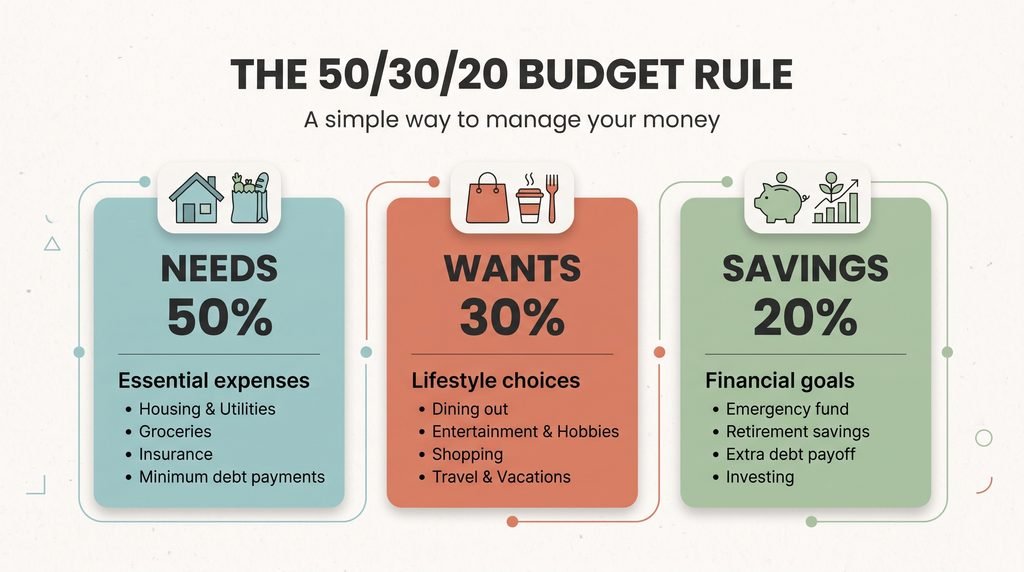
Different financial temperaments require different systems. Choosing the right framework determines whether a budget is sustainable or abandoned within weeks.
1. The 50/30/20 Rule
Popularized as a balanced baseline for moderate earners, this method segments after-tax income into three distinct buckets:
| Category | Allocation | Typical Inclusions |
| Needs | 50% | Rent/mortgage, minimum debt payments, groceries, utilities, basic insurance |
| Wants | 30% | Dining out, travel, streaming services, gym memberships, recreation |
| Savings & Extra Debt | 20% | Emergency reserve, index funds, retirement accounts, extra principal payments |
2. Zero-Based Budgeting
Under zero-based budgeting, Income − Outflow = $0. Every dollar earned receives a specific job assignment. If take-home pay is $4,000, your sum of expenses, investments, and designated savings allocations must equal exactly $4,000. Any unspent balance at the end of the month is assigned to a target—such as a sinking fund or brokerage account—leaving zero unaccounted-for cash sitting idle.
3. The Envelope (or Digital Sinking Fund) Method
Cash or dedicated digital sub-accounts receive fixed cash sums at the beginning of the month for problem areas (e.g., $400 for dining, $150 for clothing). Once the envelope or sub-account balance reaches zero, spending in that category ceases until the next monthly funding date.
Managing Budget Deviations and Sinking Funds
Budgets frequently fail when they treat every month as identical. Annual car registrations, holiday gifts, home repairs, and semi-annual insurance premiums disrupt static plans.
- Sinking Funds: Smooth irregular expenses by dividing the annual cost by 12 and setting that amount aside monthly into an escrow-style savings bucket.
- The Variance Buffer: Maintaining a small unallocated buffer ($100–$250) absorbs incidental price fluctuations at the grocery store or gas pump without triggering category deficits.
- The Monthly Review: At the close of each month, compare actual expenditures against planned caps to recalibrate target numbers for the subsequent cycle